Rediscovering C Major: How I Found Sartorio’s Violin Concerto
An exploration of nineteenth-century violin pedagogy, historical repertoire, and the remarkable musical discoveries that come from revisiting the foundations of violin playing.
Sometimes the most fascinating musical discoveries happen when we begin questioning something we have taken for granted.
For me, that discovery began with C major.
Listen to the Complete Performance
I decided to record all three movements of Sartorio’s Violin Concerto in C Major and share them together as a complete YouTube playlist.
I hope these performances introduce more violinists to this charming and relatively overlooked work.
For teachers, the concerto may offer another valuable addition to graded repertoire. For students, it presents an opportunity to experience the satisfaction of studying a complete concerto while continuing to refine essential technical and musical skills.
And for listeners, it is simply another beautiful piece of violin music waiting to be discovered.
A Different Way of Looking at the Violin Fingerboard
As I began taking a deep dive into nineteenth-century violin pedagogy, I started seeing C major on the violin in a completely different light.
One of the most fascinating discoveries was how prominently C major appeared at the beginning of historical violin methods. This was radically different from the approach commonly encountered in modern beginning violin instruction, where students are frequently introduced to keys such as D major, A major, and G major.
The more I studied these historical methods, the more I began to appreciate the logic behind beginning with C major.
On the violin, C major requires the student to develop an awareness of the natural notes and their relationships across the fingerboard, without the immediate complication of sharps and flats.
This is particularly valuable for developing intonation.
When a violinist develops a clear understanding of where the natural notes belong, the introduction of sharps and flats becomes much more logical. Rather than memorizing isolated finger patterns, the student begins to understand how notes relate to one another and how the placement of the fingers changes according to the key.
For me, revisiting C major became much more than practicing a scale. It became an exploration of the underlying organization of the violin fingerboard.
And it raised an interesting question:
What if revisiting the simplest musical foundations could transform the way we understand more advanced violin playing?
Exploring the French and Russian Schools of Violin Pedagogy
My research eventually led me deeper into the graded repertoire and teaching traditions of the French and Russian violin schools.
Although these schools are often discussed as separate traditions, their historical foundations reveal remarkable connections.
Both draw from an interconnected European violin tradition, and many of their pedagogical principles share common roots.
As I examined the progression of exercises, studies, and concertos, I became increasingly interested in how earlier pedagogues introduced musical and technical concepts through carefully selected repertoire.
The goal was not simply to learn more difficult music.
It was to develop a violinist systematically, building intonation, technique, tone, and musical understanding through a thoughtful progression of studies and compositions.
With my renewed interest in C major, I began researching violin concertos written in that key, particularly works that could serve as meaningful graded repertoire.
That search led me to a composer whose music I had not previously explored.
Arnoldo Sartorio.
Who Was Arnoldo Sartorio?
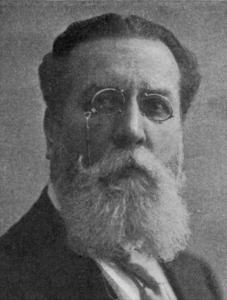
Arnoldo Sartorio (1853–1936) was a German-born composer of Italian descent whose life and work bridged the late Romantic era and the early twentieth century.
Born in Frankfurt, Germany, Sartorio worked as a composer, choral conductor, and piano teacher. His musical career included conducting activities in Strasbourg, Düsseldorf, and Cologne.
He was extraordinarily prolific, producing compositions that extended beyond 1,200 opus numbers.
Much of his music was written for teaching and for the salon-music tradition that flourished during the nineteenth century. Like many composers who devoted significant attention to educational repertoire, Sartorio became less familiar to later generations of musicians.
Yet his compositions represent an interesting part of the history of music education: a time when composers created accessible works that allowed developing musicians to experience the expressive qualities of larger musical forms.
His Schüler-Konzert in C Major, published in Cologne by P. J. Tonger in 1916, is one such work.
Written for violin and piano, the concerto can be performed entirely in first position.
What interested me was precisely this combination of accessibility and musical substance.
Here was a complete three-movement concerto in C major that connected directly with the questions I had been exploring in historical violin pedagogy.
Sartorio’s Violin Concerto in C Major: Three Movements
The concerto consists of three contrasting movements:
I. Moderato
The opening Moderato introduces the musical character of the concerto through clear melodic writing and measured phrasing. It offers opportunities to develop rhythmic stability, intonation, and musical expression within an accessible technical framework.
II. Andante
The second movement shifts toward a more lyrical and expressive character.
For the violinist, this is an opportunity to focus on the singing qualities of the instrument, developing beautiful tone through bow control, careful listening, and expressive phrasing.
III. Finale — Allegretto
The final movement brings a livelier character to the concerto. Its musical energy encourages clarity, rhythmic confidence, and a sense of forward motion.
Together, the three movements provide a complete musical experience while remaining accessible to violinists working within first position.
Returning to the Foundations
One of the most rewarding aspects of researching historical violin pedagogy is discovering that familiar musical concepts can reveal entirely new possibilities.
C major may appear simple on paper. No sharps. No flats.
Yet on the violin, understanding the natural notes, their relationships, and their placement across the fingerboard can open the door to a much deeper understanding of intonation.
My discovery of Sartorio’s concerto was a direct result of following that curiosity.
It is also a reminder of why I continue to study historical violin methods and forgotten repertoire: there is so much valuable knowledge waiting to be rediscovered.
Sometimes, advancing as a violinist means returning to the very beginning—and seeing it with entirely new eyes.
Heather Kaye Broadbent
Violinist, Educator & Founder of the Broadbent School of Violin Artistry
Study Violin with Personal Guidance
If something in your violin playing still isn’t working the way you’d like, individualized guidance can often reveal the missing piece.
In private online lessons we focus on the specific elements that shape beautiful violin playing — tone production, bow coordination, intonation, and thoughtful practice strategy.
Each lesson is tailored to your playing so that the next steps in your development become clear and achievable.
For violinists seeking deeper progress and consistent guidance, lesson packages offer the most effective and economical way to study.
Heather Kaye Broadbent is a concert violinist and founder of the Broadbent School of Violin Artistry, where she helps violinists develop beautiful tone, refined technique, and deeper musical understanding through guided study, online courses, and private instruction.

I’d Love to Hear From You
Have you studied this piece or worked through similar technical challenges?
Feel free to share your experience or questions below.

Leave a Reply
Want to join the discussion?Feel free to contribute!