
Violin Hold & Setup
An improper violin hold affects every aspect of playing the violin.
A balanced setup allows the instrument to feel secure without being gripped or forced into position. The relationship between the violin, shoulder, collarbone, head, and left hand directly affects freedom of movement, intonation, shifting, vibrato, bowing, and tone production.
When tension appears, the left hand becomes restricted, intonation becomes inconsistent, or tone begins to suffer, the underlying setup is one of the first places worth examining.
In this section, explore the principles of violin placement, support, posture, balance, and physical freedom that create a reliable foundation for everything else in violin playing.
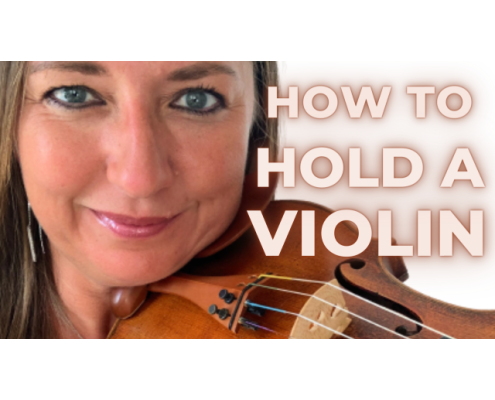 https://heatherkayeviolin.com/wp-content/uploads/2021/09/How-to-hold-a-violin-BP.png
400
495
Heather Kaye
https://heatherkayeviolin.com/wp-content/uploads/2026/09/BVSA-logo.png
Heather Kaye2021-09-05 19:20:292026-09-30 01:19:08How to Hold a Violin Properly
https://heatherkayeviolin.com/wp-content/uploads/2021/09/How-to-hold-a-violin-BP.png
400
495
Heather Kaye
https://heatherkayeviolin.com/wp-content/uploads/2026/09/BVSA-logo.png
Heather Kaye2021-09-05 19:20:292026-09-30 01:19:08How to Hold a Violin Properly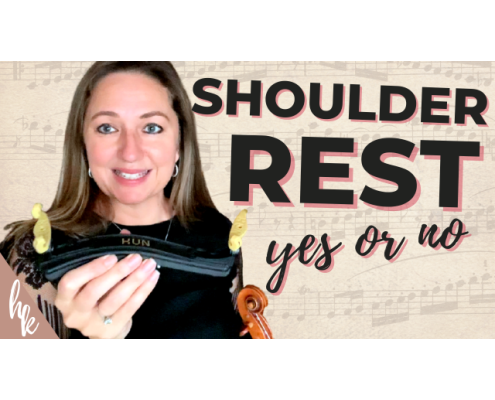 https://heatherkayeviolin.com/wp-content/uploads/2020/12/Shoulder-Rest-Yes-or-No-How-to-Know-Whether-or-Not-to-Use-Featured-Image-1.png
400
495
Heather Kaye
https://heatherkayeviolin.com/wp-content/uploads/2026/09/BVSA-logo.png
Heather Kaye2020-12-28 16:57:542026-09-30 01:20:11Shoulder Rest, Yes or No – How to Know Whether or Not to Use
https://heatherkayeviolin.com/wp-content/uploads/2020/12/Shoulder-Rest-Yes-or-No-How-to-Know-Whether-or-Not-to-Use-Featured-Image-1.png
400
495
Heather Kaye
https://heatherkayeviolin.com/wp-content/uploads/2026/09/BVSA-logo.png
Heather Kaye2020-12-28 16:57:542026-09-30 01:20:11Shoulder Rest, Yes or No – How to Know Whether or Not to UseContinue Your Studies
Foundations: Violin for Adult Beginners
For adult beginners who want more than individual lessons and articles, Foundations provides a complete, sequential introduction to violin playing.
The course guides you step by step through the physical, technical, musical, and reading skills of beginning violin study, with particular attention to sound, coordination, ease of movement, and understanding why you are doing what you are doing.
Rather than assembling your foundation from disconnected information, you can follow a carefully structured course in which each skill prepares you for the next.
No previous violin experience or music-reading experience is required.