
Exploring Second Position on the Violin: Alard’s Étude No. 7 in C Major
There is something particularly rewarding about discovering a violin étude that is both technically useful and musically engaging.
During a recent practice session, I spent several hours working on second position and exploring an étude by the 19th-century French violinist and pedagogue Jean-Delphin Alard.
Rather than presenting a traditional lesson or a carefully polished performance, I decided to share something different: a complete playthrough of Alard’s Étude No. 7 in C Major, allowing you to hear the music as part of my own practice process.
Watch: Practice with Heather — Alard’s Second-Position Étude
In this episode of Practice with Heather, you’ll hear my complete playthrough of Alard’s Étude No. 7 in C Major, along with a few observations about my practice process and what I plan to explore next.
I will also be recording a beautiful nocturne by Alard for the YouTube channel.
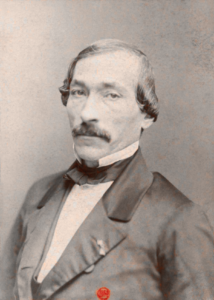
Discovering Jean-Delphin Alard
Jean-Delphin Alard (1815–1888) was a French violinist, composer, and influential professor at the Paris Conservatoire.
His contributions to violin pedagogy include études, technical exercises, and instructional works designed to develop the violinist’s command of the instrument.
I encountered Alard through my ongoing research into historical violin pedagogy, and his music has become a fascinating addition to my studies.
What I particularly appreciate about exploring these historical teaching materials is the opportunity to discover how earlier generations of violinists approached technical development through music.
An étude does not have to be merely an exercise. It can also offer opportunities for phrasing, expression, tone production, and musical imagination.
Why Study Second Position?
Second position is sometimes overlooked in violin study as students move from first position toward the more frequently explored third position.
Yet second position deserves careful attention.
Developing confidence in second position helps violinists:
- Strengthen their understanding of fingerboard geography.
- Improve intonation and left-hand organization.
- Develop flexibility when moving between positions.
- Explore alternative fingerings and tonal possibilities.
- Build greater independence from familiar first-position patterns.
Studying an entire étude in second position also encourages the hand to become comfortable in that location rather than treating it simply as a transitional stop between other positions.
Second position can be particularly useful in repertoire written in C major, offering convenient fingering possibilities and opportunities to explore different tonal colors.
Practicing an Étude Is More Than Playing the Correct Notes
The indicated tempo for this étude is approximately 112 beats per minute. For my initial playthrough, I chose a more comfortable tempo of around 80.
My intention was not to produce a metronomically strict performance.
Instead, I wanted to explore the musical possibilities of the étude, allowing myself to stretch certain phrases, move forward in others, and experiment with expression.
This is an important distinction in violin practice.
There are times when rhythmic precision and metronome work are essential. There are also times when we need to step away from mechanical execution and experience the music as a complete artistic statement.
Both approaches have their place.
What I Learned From Playing Through the Entire Étude
One of the valuable aspects of recording a complete playthrough is discovering what happens when the music continues without constant interruption.
During my performance, I noticed several places that needed additional attention, particularly some inconsistencies in my bowing on the third page.
Those observations immediately gave me direction for my next practice session.
Rather than repeatedly playing the étude from beginning to end, I can now return to specific passages, examine the bowing choices, and make decisions that support both the technique and the musical phrasing.
This is one of the most important habits a violinist can develop: learning to evaluate a performance and turn those observations into purposeful practice.
The question is not simply, “Can I play this étude?”
It is, “What did this playthrough reveal about my playing, and how can I use that information?”
The Beautiful Duet Possibilities
One of the delightful features of the edition I am studying is that it includes a second violin part.
My next project is to record the duet and experiment with playing alongside my own recording.
This introduces another layer of musical consideration.
When playing alone, I can take considerable freedom with tempo and phrasing. When performing with another part, however, I must consider how those decisions affect the musical conversation between the two voices.
I may need to establish a more consistent tempo or adjust certain phrases to accommodate the duet.
That is part of the discovery process, and I look forward to sharing the results.
Join Me for Weekly Violin Co-Practice
If you enjoy seeing how a professional violinist approaches practicing, I invite you to join my weekly co-practice sessions through the Broadbent School of Violin Artistry.
These sessions are designed to help you dedicate meaningful time to your instrument while practicing alongside me.
Think of it as a co-working session for violinists.
We each work on our own music, but we share the experience of setting aside focused time for practice.
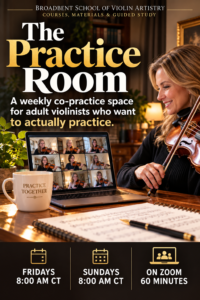
And something remarkable happens: the sessions seem to fly by!
Whether you are developing your technique, preparing repertoire, revisiting an étude, or simply trying to establish a more consistent practice routine, co-practice provides an opportunity to make that time a priority.
🎻 Learn More About Violin Co-Practice
Happy Practicing!
Heather Kaye Broadbent
Founder, Broadbent School of Violin Artistry
Study Violin with Personal Guidance
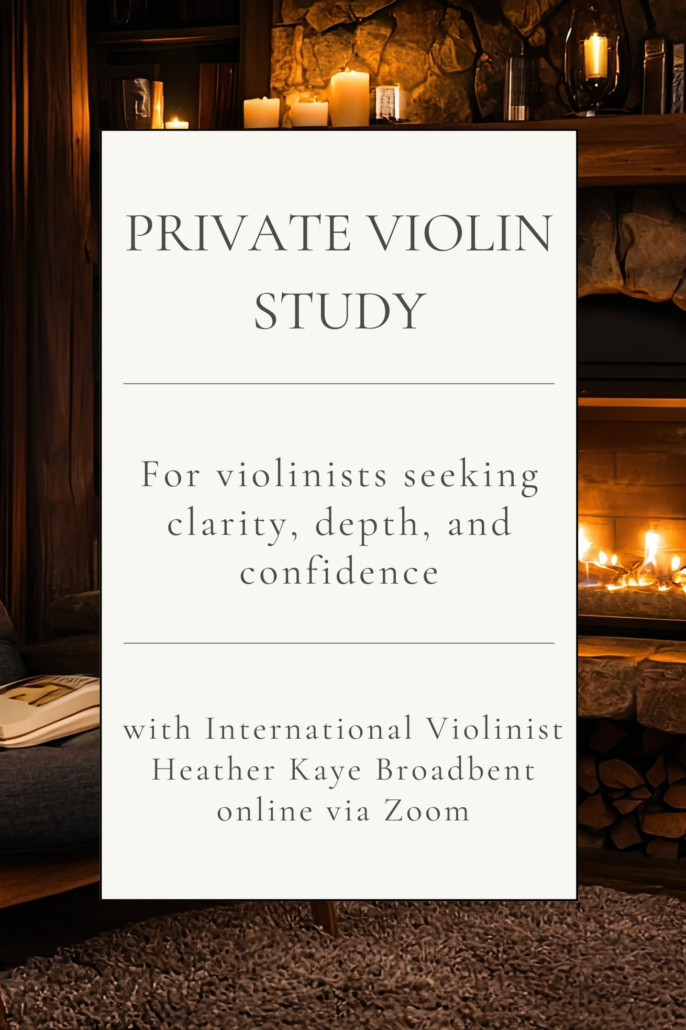
If something in your violin playing still isn’t working the way you’d like, individualized guidance can often reveal the missing piece.
In private online lessons we focus on the specific elements that shape beautiful violin playing — tone production, bow coordination, intonation, and thoughtful practice strategy.
Each lesson is tailored to your playing so that the next steps in your development become clear and achievable.
For violinists seeking deeper progress and consistent guidance, lesson packages offer the most effective and economical way to study.
Heather Kaye Broadbent is a concert violinist and founder of the Broadbent School of Violin Artistry, where she helps violinists develop beautiful tone, refined technique, and deeper musical understanding through guided study, online courses, and private instruction.

I’d Love to Hear From You
Have you explored Jean-Delphin Alard’s violin études? Are you currently working on second position?
I’d love to hear about your experiences with these historical violin studies and how you’re incorporating them into your practice.

Leave a Reply
Want to join the discussion?Feel free to contribute!