
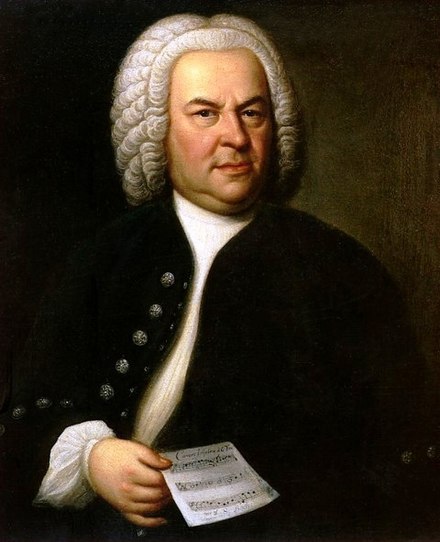
Bach’s Secret Code: The Meaning of 14, 41, and the B-A-C-H Musical Signature
Johann Sebastian Bach is often described as the architectural master of music — a composer whose works reveal extraordinary structural depth beneath their expressive beauty. One of the most fascinating aspects of Bach’s compositional world is his use of numerical symbolism, especially the numbers 1 and 4, and his famous musical signature B-A-C-H.
For violinists, pianists, and thoughtful musicians, discovering these hidden structural elements can deepen both understanding and connection to Bach’s music.
In this article, we explore:
• Bach’s birthday and its dual calendar meaning
• The musical signature B-A-C-H
• The numerical symbolism of 14 and 41
• Where the signature appears in Bach’s works
• Why studying Bach strengthens musical understanding
• How musicians can explore these ideas in practice
Violin Tutorial
When Is Bach’s Birthday? March 21 or March 31?
Johann Sebastian Bach was born in 1685, during a time when Europe used the Julian calendar. His birthdate was recorded as:
March 21, 1685
After Bach’s lifetime, many countries adopted the Gregorian calendar, which shifted the date by 10 days.
Today, Bach’s birthday is often recognized as:
March 31, 1685
This gives us a beautiful opportunity to celebrate Bach’s life across ten days, from March 21 to March 31 — a meaningful window to reflect on his lasting contribution to music.
The B-A-C-H Musical Signature
Bach embedded his name directly into music using German musical notation.
In German note naming:
• B = B-flat
• A = A
• C = C
• H = B-natural
This creates the musical motif:
B♭ – A – C – B
This sequence appears throughout music history as a tribute to Bach, but Bach himself also explored this idea within his compositions.
This four-note cell has become known as the B-A-C-H motif or Bach musical signature.
The Number 14: Bach’s Numerical Identity
Bach’s fascination with numbers extended beyond notes.
If we assign numerical values to the letters of his name using alphabetical order:
B = 2
A = 1
C = 3
H = 8
2 + 1 + 3 + 8 = 14
The number 14 became closely associated with Bach and is frequently referenced in analyses of his works.
Interestingly, the reverse number 41 also appears in discussions of Bach’s structural symbolism.
41: The Mirror of 14
If we include Bach’s initials:
J = 9
S = 18
Adding these values to the 14 from B-A-C-H:
9 + 18 + 14 = 41
We now have a mirrored pair:
14 and 41
Many scholars and musicians have noted how frequently these numbers appear in Bach’s music, structures, and cataloging traditions.
For example:
Bach Violin Concerto in A minor carries the catalog number BWV 1041
The number 41 appears again — a fascinating coincidence or perhaps an intentional symbolic connection.
Musical Examples of the B-A-C-H Motif
Bach did not always present the B-A-C-H notes directly in sequence. Often, he wove them into the musical texture with subtle variation or delay.
Example possibilities include:
Bach Invention No. 1 (Piano)
Toward the end of the piece, listeners can observe a play on:
B-flat
A
C
B-natural
These pitches appear in close proximity, creating the suggestion of the musical signature.
Sarabande from the Cello Suites (adapted for violin)
Moments occur where B-flat and A appear, followed shortly by C and B-natural — not always consecutively, but suggestively linked.
Is this definitively Bach’s signature?
Perhaps — perhaps not.
But the exploration itself strengthens musical awareness.
The Numbers 1 and 4 in Bach’s Music
Beyond literal numeric symbolism, the numbers 1 and 4 can also be understood musically.
One interpretation connects 1 and 4 to the perfect fourth interval, which plays an important role in Bach’s harmonic language.
Throughout the Sonatas and Partitas for violin, we often encounter:
• resolutions involving the perfect fourth
• tension between augmented fourths and diminished fifths
• structural use of intervallic relationships that reinforce tonal stability
This reflects Bach’s deep commitment to coherent musical architecture.
Bach, Emotion, and Healing
Bach’s music is not only structurally profound — it is emotionally transformative.
Bach experienced significant grief in his lifetime, including the loss of his first wife, Maria Barbara.
His Chaconne from the Partita in D minor is often associated with this period of mourning and reflection.
Many musicians describe Bach’s music as:
• grounding
• clarifying
• stabilizing
• deeply expressive
• spiritually nourishing
Johannes Brahms famously said:
“Study Bach — you will find everything.”
How Musicians Can Explore Bach’s Signature
When studying Bach’s works — whether on violin, piano, or another instrument — it can be inspiring to observe possible appearances of:
• the B-A-C-H motif
• the numbers 14 and 41
• structural uses of the interval of a fourth
• symbolic relationships between pitch and number
This kind of exploration encourages:
• deeper listening
• structural awareness
• curiosity in practice
• connection to musical lineage
Even if some occurrences are coincidental, the act of searching sharpens musical perception.
Final Thoughts
Bach’s music invites both intellectual engagement and emotional depth.
His integration of structure, symbolism, and expression continues to inspire musicians centuries later.
The idea that music can contain layers of meaning — audible, mathematical, symbolic, and emotional — reminds us why Bach remains central to musical study.
What we have explored here is only the beginning.
The world of Bach contains endless connections waiting to be discovered.
Continue Exploring Bach
If you are studying Bach, consider noticing:
Where do you see the B-A-C-H motif?
Where might the number 14 appear?
Do you observe structural relationships built on fourths?
Share your discoveries in the comments — the exploration itself deepens musicianship.
Happy Practicing,

Study Violin with Personal Guidance
If something in your violin playing still isn’t working the way you’d like, individualized guidance can often reveal the missing piece.
In private online lessons we focus on the specific elements that shape beautiful violin playing — tone production, bow coordination, intonation, and thoughtful practice strategy.
Each lesson is tailored to your playing so that the next steps in your development become clear and achievable.
For violinists seeking deeper progress and consistent guidance, lesson packages offer the most effective and economical way to study.
Heather Kaye Broadbent is a concert violinist and founder of the Broadbent School of Violin Artistry, where she helps violinists develop beautiful tone, refined technique, and deeper musical understanding through guided study, online courses, and private instruction.

I’d Love to Hear From You
Have you studied this piece or worked through similar technical challenges?
Feel free to share your experience or questions below.


Leave a Reply
Want to join the discussion?Feel free to contribute!