
Rieding Concertino in A Minor, Op. 21 – Opening Tutorial (Hungarian Style)
Rieding Concertino Op 21 in A Minor is one of the most dramatic works in the early violin repertoire.
Although the piece is often introduced to developing violinists, it carries a powerful musical character. The opening measures are full of intensity, bold gestures, and passionate phrasing. As a result, they immediately draw the listener into the music.
In the tutorial below, we explore the opening of the concertino. We look at several musical and technical ideas that help bring this fiery introduction to life.
Rieding Concertino Op 21 A Minor Violin Tutorial
In this lesson, I guide violinists step by step through the opening section of Rieding’s Hungarian-style Concertino.
First, we explore the musical ideas that shape the character of the piece. Then we look at several technical details that help the passage speak clearly.
Topics discussed in the tutorial include:
• Bow distribution and how it shapes the opening phrase
• Left-hand positioning and shifting choices
• The repeated down-bow articulation that creates dramatic intensity
• Using vibrato and phrasing to help the melody sing
Together, these elements establish the emotional tone of the concertino.
Rieding and the Hungarian Style
Oskar Rieding composed several concertinos for developing violinists while teaching in Central Europe during the late nineteenth century.
At that time, Hungarian musical influence was widespread throughout the region. In particular, it appeared frequently in violin repertoire.
Hungarian-inspired music is known for passionate expression, strong rhythmic gestures, and dramatic contrasts. Because of this influence, the opening of Rieding Concertino Op 21 immediately feels bold and theatrical.
Even though the technical level remains accessible, the musical character is striking and expressive.
A Dramatic Opening
The opening section of the concertino carries strong emotional intensity.
Through careful bow control, thoughtful phrasing, and expressive vibrato, violinists can reveal the drama written into the music.
In the tutorial above, we explore how these elements work together to shape the phrase and create the passionate atmosphere of the opening.
Full Performance of the Concertino
If you would like to hear the complete work in performance, you can listen to the full violin and piano performance here.
In the performance recording, the piano accompaniment was created using Tomplay, which provides high-quality accompaniment tracks for violin repertoire.
Practicing with accompaniment can help violinists better understand the harmonic structure of the music and develop stronger rhythmic coordination while studying the piece.
Continue Learning this Piece and More
This tutorial offers a brief glimpse into the musical and technical ideas behind the opening of the concertino.
For violinists who would like step-by-step guidance through the entire piece, along with many other works by Oskar Rieding, the full course is available inside the Broadbent School of Violin Artistry.
Discovering Oskar Rieding
Essential Pieces for Developing Violinists
Inside the course you will find:
• Detailed tutorials for nearly every piece Rieding wrote
• Slow playthroughs and performance demonstrations
• Practice checklists to guide your work
• Technical insights to strengthen tone and coordination
• Encouragement and musical guidance throughout the repertoire
The course is designed to help violinists deepen their technique and musical expression while exploring one of the most impactful composers in the developing violin repertoire.
Study Violin with Personal Guidance
For violinists who would like individualized support while studying repertoire such as Rieding’s concertinos, private online lessons are also available.
In these sessions we can work together on:
• Tone production and bow coordination
• Intonation and shifting
• Musical phrasing and interpretation
• Practice strategies that help pieces come together efficiently
Lessons are tailored to each violinist’s goals and level of experience.
🎻 Schedule a private lesson below.
Happy Practicing,

I’d Love to Hear From You
Have you studied this piece or worked through similar technical challenges?
Feel free to share your experience or questions below.
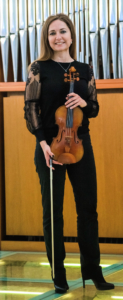
Heather Kaye Broadbent is a classically trained concert violinist and the founder of the Broadbent School of Violin Artistry, an online learning environment dedicated to helping violinists develop beautiful tone, refined technique, and deeper musical understanding.
She received her Bachelor of Music in Violin Performance from the University of Colorado Boulder and has performed professionally in both the United States and Europe, including orchestral work in Bulgaria with the Gabrovo Chamber Orchestra and the Yambol Chamber Orchestra. Earlier in her career she held leadership positions in orchestras throughout the greater Chicago–Milwaukee region.
Through her teaching, Heather has worked with millions of violinists worldwide via YouTube lessons, online courses, group coaching programs, and private instruction. Her students have earned awards in competitions, held concertmaster positions in youth and regional orchestras, and performed in prestigious venues including Carnegie Hall.
Her teaching philosophy emphasizes gorgeous tone, balanced technique, and thoughtful musicianship, guiding violinists to develop not only technical skill but a lifelong relationship with music.
Heather is also an advocate for a holistic approach to violin playing, recognizing that physical awareness, mental focus, and artistic curiosity all play an important role in the violinist’s journey.


Leave a Reply
Want to join the discussion?Feel free to contribute!