
Rieding Concertino in D Major, Op. 25 – Adagio
The Rieding Concertino in D Major, Op. 25 Adagio provides a lyrical contrast to the outer movements of the concertino. In this expressive movement, the violin unfolds in long singing phrases over a gentle piano accompaniment.
Because of its calm character, the Adagio invites the violinist to focus on tone, phrasing, and musical line. Instead of speed or virtuosity, the emphasis shifts toward expressive playing and careful listening.
Oskar Rieding wrote his concertinos specifically for developing violinists. As a result, these works introduce students to concerto-style playing while remaining technically approachable. Even today, they remain a central part of violin pedagogy.
Watch the Performance
Enjoy this performance of the Adagio from Oskar Rieding’s Concertino in D Major, Op. 25 for violin and piano.
Musical Character of the Adagio
The Adagio movement is built on calm, expressive melodic lines. These lines encourage the violinist to play with warmth and musical sensitivity.
When studying this movement, violinists often focus on several musical elements. First, it is important to develop a sustained singing tone. Next, careful bow distribution helps shape the long phrases of the melody.
In addition, stable intonation supports the lyrical character of the music. Finally, listening closely to the piano harmony helps the violinist understand where each phrase leads.
Because of these qualities, the Adagio offers an excellent opportunity to deepen both musical awareness and tonal control.
Rieding Concertino in D Major Op. 25 – Adagio Piano Accompaniment
For violinists studying the Rieding Concertino in D Major, Op. 25 – Adagio, the following piano accompaniment can be used for practice or rehearsal.
Practicing with the piano part helps violinists develop a stronger sense of phrasing and timing. In addition, it highlights the musical dialogue between the violin and the accompaniment.
Hearing the harmonic structure of the piece often clarifies how the phrases unfold. As a result, many violinists find it easier to shape the musical line.
This accompaniment recording allows violinists to rehearse the Adagio from Rieding’s Concertino Op. 25 with a full piano part. At the same time, it supports work on tone, musical line, and expressive playing.
Explore the Other Movements of the Concerto
This article is part of a series exploring the complete Rieding Concertino in D Major, Op. 25.
In addition, you can explore the other movements in this repertoire guide:
• First Movement – Allegro Moderato
• Third Movement – Allegro Vivace
Guided Study of Rieding’s Violin Repertoire
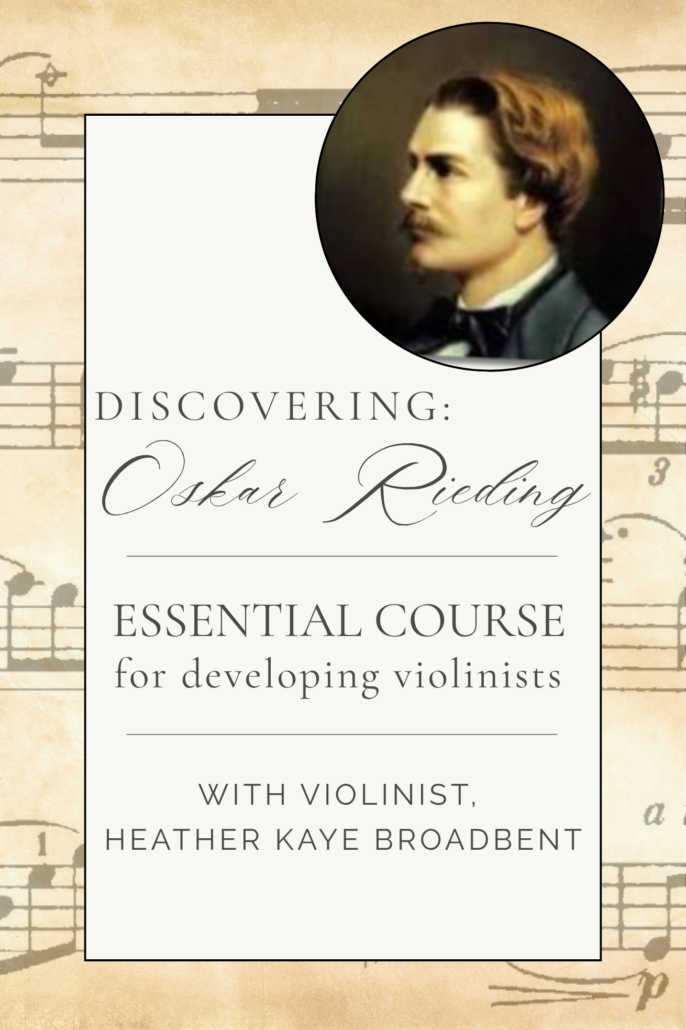
For violinists who would like to explore this music more deeply, the Rieding works are studied within the program Discovering Oskar Rieding: Repertoire for Developing Violinists inside the Broadbent School of Violin Artistry.
Rather than focusing on a single concertino, this program explores Rieding’s violin repertoire as a complete pedagogical cycle. Students work through multiple concertos, concertinos, and companion works while developing tone, coordination, intonation, and musical understanding.
The program includes:
• Guided repertoire lessons
• Detailed playthrough demonstrations
• Piano accompaniment resources
• Practice strategies for each work
• Warm-ups, scales, and technical preparation
• Historical and pedagogical context for Rieding’s violin music
The repertoire unfolds gradually, allowing violinists to remain within the same musical language while expanding technical and expressive capacity.
💫 Explore the full program here.
About Oskar Rieding
Oskar Rieding (1840–1918) was a German violinist, conductor, and composer. He is best known for his pedagogical concertinos for violin.
These works introduce developing violinists to concerto-style repertoire in a clear and approachable way. At the same time, they encourage students to refine tone, intonation, and musical expression.
Because of these qualities, pieces such as the Rieding Concertino in D Major, Op. 25 continue to be studied by violinists around the world.
Study Violin and Piano with Personal Guidance
If you feel that something in your playing is not quite working yet, individualized guidance can often reveal the missing piece.
In private online lessons we focus on the elements that shape beautiful music making. These include tone production, bow coordination, intonation, musical phrasing, and thoughtful practice strategies.
Each lesson is tailored to your goals. As a result, the next steps in your development become clear, practical, and encouraging.
Whether you are returning to the violin after time away or deepening your musical understanding, private study offers a focused and supportive path forward.
🎻 Schedule a private online lesson below.
Happy Practicing,

Have you studied this piece or worked through similar technical challenges?
Feel free to share your experience or questions below.
Heather Kaye Broadbent is a classically trained concert violinist and the founder of the Broadbent School of Violin Artistry, an online learning environment dedicated to helping violinists develop beautiful tone, refined technique, and deeper musical understanding.
She received her Bachelor of Music in Violin Performance from the University of Colorado Boulder and has performed professionally in both the United States and Europe, including orchestral work in Bulgaria with the Gabrovo Chamber Orchestra and the Yambol Chamber Orchestra. Earlier in her career she held leadership positions in orchestras throughout the greater Chicago–Milwaukee region.
Through her teaching, Heather has worked with millions of violinists worldwide via YouTube lessons, online courses, group coaching programs, and private instruction. Her students have earned awards in competitions, held concertmaster positions in youth and regional orchestras, and performed in prestigious venues including Carnegie Hall.
Her teaching philosophy emphasizes gorgeous tone, balanced technique, and thoughtful musicianship, guiding violinists to develop not only technical skill but a lifelong relationship with music.
Heather is also an advocate for a holistic approach to violin playing, recognizing that physical awareness, mental focus, and artistic curiosity all play an important role in the violinist’s journey.
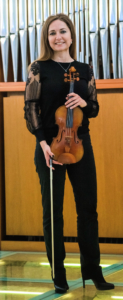
 Heather Kaye Broadbent
Leave a Reply
Want to join the discussion?Feel free to contribute!