
Monti Czárdás (Csárdás) for Violin – Performance and Musical Insights
Monti Czárdás for violin remains one of the most recognizable and exciting showpieces in the violin repertoire.
Inspired by traditional Hungarian dance music, Monti Czárdás for violin moves from a slow, expressive opening into a fiery virtuosic finale.
Inspired by traditional Hungarian dance music, the piece moves from a slow, expressive opening into a fiery, virtuosic finale. Violinists must balance lyricism, rhythmic drive, and technical control while maintaining clarity and character throughout.
Because of this combination of drama and technique, Czárdás is often performed in concerts, recitals, and competitions.
Violin Performance
Musical Character of Czárdás
The structure of Monti’s Czárdás reflects the traditional Hungarian dance form, which alternates between contrasting moods.
The opening section is slower and expressive, allowing the violinist to explore tone color and phrasing. As the piece unfolds, the music gradually increases in energy and intensity, eventually building toward the famous rapid finale.
Throughout the piece, violinists must carefully manage:
• Rhythmic Clarity
• Bow Distribution
• Articulation Changes
• Expressive Phrasing
• Fast Passagework In The Upper Register
When these elements are balanced well, the piece feels both dramatic and joyful.
Technical Challenges in Monti Czárdás for Violin
Although Czárdás is often heard as a virtuosic showpiece, its challenges are rooted in several important technical foundations.
Violinists frequently encounter difficulties with:
• Rapid String Crossings
• Clear Articulation In Fast Passages
• Coordination Between The Left Hand And Bow Arm
• Maintaining Rhythmic Stability In Accelerando Sections
• Controlling Tone During Fast Bow Strokes
Developing these skills gradually allows the piece to feel much more natural under the fingers.
Studying Czárdás with Guidance
Violinists who would like to study this piece more deeply can explore the guided repertoire study available inside the Broadbent School of Violin Artistry.
The course breaks the piece into manageable sections and addresses the technical foundations that allow the music to feel clear, confident, and expressive.
💫 Study the Czárdás course here
Piano Accompaniment
The piano accompaniment heard in this performance was recorded by me.
Although interactive accompaniments are available through platforms such as Tomplay, I chose to record my own accompaniment for this performance in order to shape the rubato and phrasing more freely.
For violinists who would like to practice the piece with this same accompaniment, the piano track is available here:
🎹 Practice Czárdás With This Piano Accompaniment
For those who prefer interactive sheet music with orchestral and piano tracks, Tomplay also offers a practice version of the piece.
The Role of Showpieces in Violin Study
Showpieces like Czárdás play an important role in violin development.
While they are exciting to perform, they also encourage violinists to refine essential technical skills such as articulation, rhythmic control, and expressive phrasing.
When approached thoughtfully, repertoire like this helps violinists build both technical confidence and musical freedom.
Study Violin with Personal Guidance
If you feel that something in your violin playing is not quite working yet, individualized guidance can often reveal the missing piece.
In private online lessons we focus on the specific elements that shape beautiful violin playing — tone production, bow coordination, intonation, and thoughtful practice strategy.
Each lesson is tailored to your playing so that the next steps in your development become clear and achievable.
🎻 Schedule a private online lesson below.
Happy Practicing,

Have you studied this piece or worked through similar technical challenges?
Feel free to share your experience or questions below.
Heather Kaye Broadbent is a classically trained concert violinist and the founder of the Broadbent School of Violin Artistry, an online learning environment dedicated to helping violinists develop beautiful tone, refined technique, and deeper musical understanding.
She received her Bachelor of Music in Violin Performance from the University of Colorado Boulder and has performed professionally in both the United States and Europe, including orchestral work in Bulgaria with the Gabrovo Chamber Orchestra and the Yambol Chamber Orchestra. Earlier in her career she held leadership positions in orchestras throughout the greater Chicago–Milwaukee region.
Through her teaching, Heather has worked with millions of violinists worldwide via YouTube lessons, online courses, group coaching programs, and private instruction. Her students have earned awards in competitions, held concertmaster positions in youth and regional orchestras, and performed in prestigious venues including Carnegie Hall.
Her teaching philosophy emphasizes gorgeous tone, balanced technique, and thoughtful musicianship, guiding violinists to develop not only technical skill but a lifelong relationship with music.
Heather is also an advocate for a holistic approach to violin playing, recognizing that physical awareness, mental focus, and artistic curiosity all play an important role in the violinist’s journey.
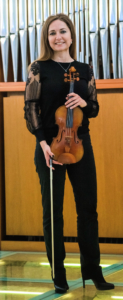
 Heather Kaye Broadbent
 Heather Kaye Broadbent
Leave a Reply
Want to join the discussion?Feel free to contribute!