
Bach Violin Concerto in A Minor – Andante (BWV 1041)
The Andante from the Bach Violin Concerto in A Minor, BWV 1041, is one of the most beloved slow movements in the violin repertoire.
In this second movement, Johann Sebastian Bach creates a deeply expressive musical landscape. The violin sings in long, unfolding phrases while the accompaniment moves steadily beneath it. As a result, the solo line feels both intimate and noble.
For violinists studying the Bach Violin Concerto in A Minor Andante, this movement offers a powerful opportunity to develop tone, phrasing, and musical stillness.
Bach Violin Concerto A Minor – Andante Performance
In this performance of the Bach Violin Concerto in A Minor Andante, the violin line unfolds over a gently pulsing accompaniment that supports the lyrical character of the movement.
The accompaniment was created using Tomplay, a platform that provides high-quality orchestral and piano tracks for violinists.
Practicing with accompaniment helps develop:
• Phrase shaping
• Rhythmic stability
• Listening within harmonic context
Study the Entire Concerto Step-by-Step
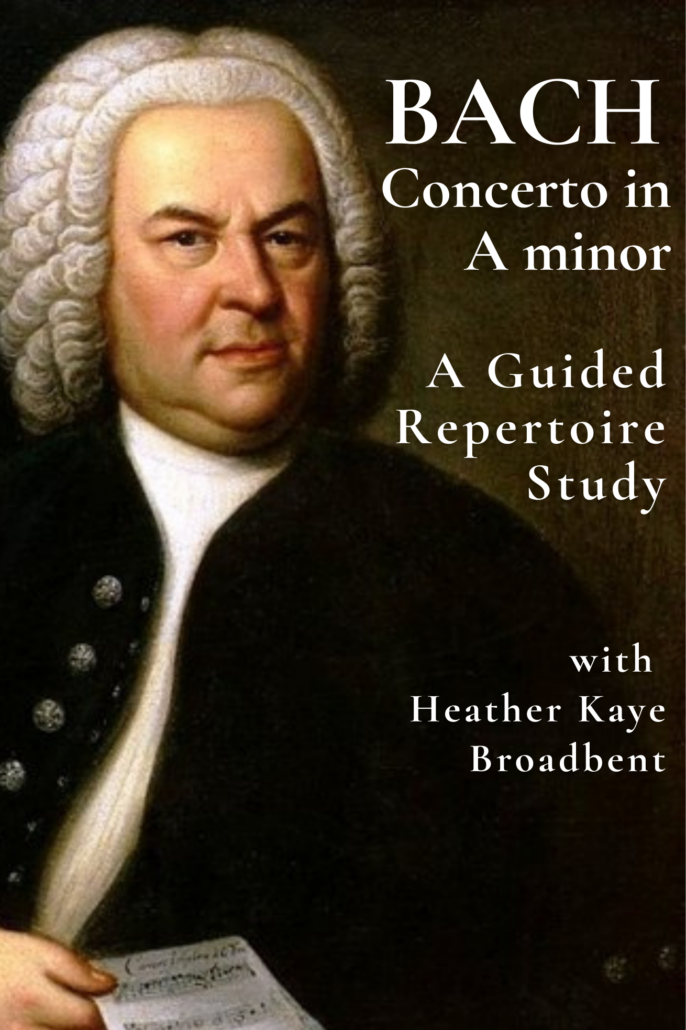
This lesson is part of a complete guided study of the Bach Violin Concerto in A Minor inside the Broadbent School of Violin Artistry.
Rather than approaching the concerto as isolated passages, the course presents the work as a coherent musical and technical journey, supporting violinists in developing tone, coordination, phrasing, and structural understanding.
Inside the program, you’ll find:
• Detailed practice guidance for each movement
• Step-by-step technical breakdowns
• Bowing and intonation strategies
• Musical phrasing and structure
• Guided repertoire coaching
💫 Explore the full course inside the Broadbent School:
Why the Bach A Minor Andante Is So Important
The Andante from BWV 1041 is often described as one of Bach’s most vocal violin movements.
Unlike fast movements that rely on technical brilliance, this music demands control, patience, and deep listening.
For this reason, the Bach Violin Concerto in A Minor second movement becomes a foundational study in:
• Sustained tone production
• Bow control across long phrases
• Expressive phrasing without excess tension
• Musical clarity within a slow tempo
A Study in Singing Tone
The Andante from the Bach Violin Concerto in A Minor is often described as one of the most vocal slow movements Bach wrote for violin.
Rather than relying on virtuosic display, the movement invites the violinist to sustain long musical lines with clarity and poise.
Because of this, it becomes an ideal study in:
• Bow control
• Tone production
• Musical breathing
• Expressive phrasing
The music unfolds with quiet intensity, revealing the elegant balance that defines Bach’s writing.
Fingerings, Bowings, and Tone Color
The fingerings used in this performance are placed intentionally for tone color and string resonance, not simply for ease of execution.
Likewise, the bowings were chosen in response to the musical structure and the natural voice of the violin.
This movement demands exceptional bow control, tonal balance, and precise intonation.
In many ways, it feels like a quiet cathedral of sound. When the intonation settles, the music opens into something luminous — almost like hearing voices within the harmony.
A Personal Journey with the Bach A Minor Andante
I first studied the Andante from Bach’s Violin Concerto in A Minor, BWV 1041 as a young teenager.
Later, as a teacher, I returned to this movement many times while preparing students for performances and competitions.
Over the years, I have experienced this music from several perspectives: as a soloist, as an accompanist, and within an orchestral setting. Each experience revealed something new about Bach’s writing.
While preparing this repertoire study, I returned to the score in depth, exploring phrasing, bowings, and fingering possibilities across multiple editions.
After stepping away briefly and returning with fresh perspective, the musical direction became clearer. The recording you hear here reflects that process.
Study the Complete Concerto
This Andante is part of a complete guided study of the Bach Violin Concerto in A Minor inside the Broadbent School of Violin Artistry.
Rather than approaching the concerto as isolated passages, the course presents the work as a coherent musical and technical journey.
Violinists develop:
• Tone and bow control
• Phrase structure and musical pacing
• Intonation within harmonic context
• Coordination across all three movements
💫 Click here to explore the full guided course.
Practicing with Tomplay
The accompaniment used in this performance was created using Tomplay, an interactive sheet music platform that allows violinists to practice with orchestral and piano backing tracks.
Tomplay enables musicians to:
• Slow down passages
• Loop difficult sections
• Practice with full accompaniment
🎼 Get 20% off Tomplay’s annual subscription here:
https://tomplay.refr.cc/default/u/heatherl
Related Studies
If you are working on the Bach Violin Concerto in A Minor, you may also find these resources helpful:
- Bach Violin Concerto in A Minor – First Movement Allegro
- How to Practice Bach Violin Concerto in A Minor – Third Movement (m. 82-90)
- How to Practice Bach Violin Concerto in A Minor – Third Movement (m. 105-116)
💫 Explore the full guided course:
Bach Violin Concerto in A Minor Guided Repertoire Study
Study Bach with Guidance
If you are studying the Bach Violin Concerto in A Minor and would like personal guidance, you are welcome to schedule a private online lesson.
Final Thoughts
The Bach Violin Concerto in A Minor Andante invites the violinist into a different kind of mastery — one based not on speed, but on control, listening, and musical presence.
When tone, phrasing, and intonation align, the music reveals a depth that continues to unfold over time.
Happy Practicing,
Study Violin with Personal Guidance
If something in your violin playing still isn’t working the way you’d like, individualized guidance can often reveal the missing piece.
In private online lessons we focus on the specific elements that shape beautiful violin playing — tone production, bow coordination, intonation, and thoughtful practice strategy.
Each lesson is tailored to your playing so that the next steps in your development become clear and achievable.
For violinists seeking deeper progress and consistent guidance, lesson packages offer the most effective and economical way to study.
Heather Kaye Broadbent is a concert violinist and founder of the Broadbent School of Violin Artistry, where she helps violinists develop beautiful tone, refined technique, and deeper musical understanding through guided study, online courses, and private instruction.

I’d Love to Hear From You
Have you studied the Bach Violin Concerto in A Minor Andante?
Feel free to share your experience or questions below.

 Heather Kaye Broadbent
Leave a Reply
Want to join the discussion?Feel free to contribute!