
Oskar Rieding – Dance of the Dragonflies (Libellentanz, Op. 20)
Rieding Dance of the Dragonflies Op 20, also known as Libellentanz, is one of the most fascinating yet rarely discussed miniatures in the violin repertoire.
While Rieding is widely known for his concertinos and student concertos, this charming work reveals another side of his writing. Beneath its playful character lies a carefully designed study in shifting, fingerboard awareness, and fluid movement across the violin.
Despite its pedagogical brilliance, the piece is largely absent from modern violin syllabi and graded examination systems. It rarely appears in the standard repertoire collections used in American violin teaching.
Yet the piece offers developing violinists something extremely valuable: a musical way to explore the entire fingerboard with confidence.
Rieding Dance of the Dragonflies Op 20 – Violin and Piano Performance
In this performance, the miniature unfolds as a graceful study in motion. The gestures rise and fall like the flight of a dragonfly — light, quick, and fluid.
Although short, the piece offers rich opportunities for developing violinists to explore:
• Shifting confidence
• Fingerboard awareness
• Expressive articulation
• Freedom of movement along the string
Piano Accompaniment
While Dance of the Dragonflies (Libellentanz, Op. 20) is often approached as a short violin study, the piano accompaniment plays an important musical role in shaping the character of the piece.
In this recording, the piano part is also performed by Heather Kaye Broadbent, allowing the full musical texture of the work to unfold within a single interpretation.
The accompaniment provides more than harmonic support. It helps establish the light, playful atmosphere that gives the piece its name. The gentle rhythmic motion in the piano evokes the quick, hovering movement of a dragonfly, while also supporting the violin’s shifting gestures across the fingerboard.
For violinists practicing the piece, working with the accompaniment can help develop:
• A stronger sense of rhythmic stability
• Awareness of musical dialogue between violin and piano
• Confidence maintaining line while shifting positions
• Ensemble listening skills
A separate piano accompaniment video is also available for violinists who would like to practice the piece with a collaborative piano track.
This allows students to rehearse the piece at home while experiencing the full chamber texture of the music.
The Hidden Pedagogy Inside the Piece
When studying Rieding Dance of the Dragonflies Op 20, it quickly becomes clear that the composer wrote the piece with a very specific pedagogical goal in mind.
Rather than keeping the violinist confined to a single position, the music gently guides the player up and down a single string, encouraging exploration of higher positions while maintaining musical flow.
In doing so, the piece quietly teaches an important concept:
The violin fingerboard is not a collection of isolated positions.
It is a continuous landscape.
By moving gradually across the string, the violinist begins to understand the fingerboard as a grid rather than a set of intimidating barriers between positions.
This approach removes the fear of shifting and replaces it with curiosity and exploration.
A New Edited Edition
As part of my Discovering Oskar Rieding project, I created a new violin edition of this piece.
The fingerings in this edition are intentionally challenging and designed to guide the player toward:
• Greater confidence in higher positions
• Stronger vertical fingerboard awareness
• Accuracy in shifting
• Ease while ascending and descending large distances
The shifts are placed to mimic the effortless rising and gliding motion of a dragonfly.
Rather than approaching shifting with tension or fear, the violinist is encouraged to experience the motion as suspended and natural.
✨ Explore the edited violin edition here:
💫 https://shop.heatherkayeviolin.com/b/NtvV0
(This edition includes the violin part edited by Heather Kaye Broadbent along with the public-domain piano score.)
Why This Piece Matters
Although Rieding Dance of the Dragonflies Op 20 is a short work, it serves as an important stepping stone toward more advanced repertoire.
Mastering this type of fluid shifting prepares the violinist for:
• Romantic violin literature
• Expressive lyrical repertoire
• Advanced fingerboard navigation
• Large interval shifts found in concert repertoire
Pieces like this quietly build the technical and musical confidence that later repertoire requires.
The Rieding Repertoire Cycle
Dance of the Dragonflies is one small part of a much larger and beautifully designed repertoire world.
Oskar Rieding composed a series of works that guide violinists from foundational playing toward increasingly expressive and technically refined music.
These include:
• Concerto in B Minor, Op. 35
• Concerto in D Major, Op. 36
• Concerto in G Major, Op. 34
• Concertino in A Minor, Op. 21
• Concertino in G Major, Op. 24
• Concertino in D Major, Op. 25
Together, these works form a developmental cycle that supports the growth of tone, coordination, phrasing, and musical confidence.
Continue the Journey: Discovering Oskar Rieding
For violinists who would like structured guidance through this repertoire, I created the course:
Discovering Oskar Rieding: Repertoire for Developing Violinists
This curriculum-level study explores Rieding’s works not as isolated pieces, but as a coherent pedagogical cycle.
Inside the course you will find:
• Step-by-step tutorials
• Guided playthroughs
• Piano accompaniment tracks
• Repertoire workbooks
• Scales and warm-ups
• Fingering and shifting strategies
The course supports both independent learners and violin teachers seeking deeper insight into this repertoire.
💫 Explore the full course here:
https://shop.heatherkayeviolin.com/b/NtvV0
A Hidden Gem of the Violin Repertoire
Many pieces quietly disappear from the violin repertoire simply because they fall outside examination systems or common teaching traditions.
Dance of the Dragonflies is one of those hidden gems.
Yet within this small miniature lies a beautifully crafted lesson in movement, freedom, and confidence on the violin.
For developing violinists willing to explore it, the piece offers both musical charm and profound technical insight.
Study Violin or Piano with Personal Guidance
If you are exploring repertoire like Rieding Dance of the Dragonflies Op 20 and feel that something in your playing is not quite working yet, individualized guidance can often reveal the missing piece.
In private online lessons we work carefully through the elements that shape beautiful music-making at the instrument.
For violinists, lessons may focus on:
• Tone production and bow coordination
• Shifting with ease and confidence
• Left-hand organization for reliable intonation
• Fingerboard awareness and position work
• Musical phrasing and expressive shaping
For pianists working with violin repertoire, we may explore:
• Collaborative piano skills
• Supporting violin phrasing through harmonic awareness
• Ensemble listening and rhythmic stability
• Building confidence accompanying violin repertoire
Lessons are tailored to each musician so that the next steps in development become clear and achievable.
Whether you are returning to the violin after time away, preparing repertoire with a pianist, or simply seeking deeper musical understanding, thoughtful guidance can transform the practice process.
🎻🎹 Schedule a private online lesson here:
Happy Practicing,

Have you studied this piece or worked through similar technical challenges?
Feel free to share your experience or questions below.
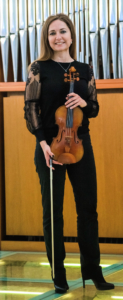
Heather Kaye Broadbent is a classically trained concert violinist and the founder of the Broadbent School of Violin Artistry, an online learning environment dedicated to helping violinists develop beautiful tone, refined technique, and deeper musical understanding.
She received her Bachelor of Music in Violin Performance from the University of Colorado Boulder and has performed professionally in both the United States and Europe, including orchestral work in Bulgaria with the Gabrovo Chamber Orchestra and the Yambol Chamber Orchestra. Earlier in her career she held leadership positions in orchestras throughout the greater Chicago–Milwaukee region.
Through her teaching, Heather has worked with millions of violinists worldwide via YouTube lessons, online courses, group coaching programs, and private instruction. Her students have earned awards in competitions, held concertmaster positions in youth and regional orchestras, and performed in prestigious venues including Carnegie Hall.
Her teaching philosophy emphasizes gorgeous tone, balanced technique, and thoughtful musicianship, guiding violinists to develop not only technical skill but a lifelong relationship with music.
Heather is also an advocate for a holistic approach to violin playing, recognizing that physical awareness, mental focus, and artistic curiosity all play an important role in the violinist’s journey.


Leave a Reply
Want to join the discussion?Feel free to contribute!